Wildlife of Makalu–Barun: A Naturalist’s Guide
Explore the rare animals and fragile ecosystems of Nepal’s wildest national park.
A Wilderness Still Alive
Makalu–Barun National Park is one of Nepal’s most extraordinary natural sanctuaries — a place where wildlife still moves with freedom, where ancient forests remain untouched, and where the dramatic rise from subtropical valleys to icy Himalayan peaks creates one of the richest biodiversity zones on Earth.
For naturalists, trekkers and wildlife enthusiasts, this region is a rare opportunity to witness ecosystems that have vanished elsewhere. Snow leopards still patrol high ridges. Red pandas hide in dense bamboo groves. Himalayan black bears leave claw marks on ancient trees. And more than 400 bird species — from the colorful monal to the elusive satyr tragopan — fill the forests with life.
Yet Makalu–Barun is not a zoo. Its wildlife is shy, often unseen, and fiercely protected by the landscape. Trekkers who enter this region must do so with patience and respect. At Eagle Trail Escapes, our trekking style prioritizes silence, minimal intrusion and cooperation with local communities who understand the land better than anyone.
A Landscape Built for Biodiversity
The secret behind Makalu–Barun’s incredible wildlife variety lies in one simple fact: elevation. The park stretches from the warm Arun River valley at 435m to the icy summit of Makalu at 8,485m. Nowhere else in Nepal do so many ecological zones overlap in such a compact area.
Key ecosystems include:
- Subtropical forests with sal, pine, bamboo and broadleaf species.
- Temperate forests of oak, birch, maple and magnolia — a paradise for birds.
- Subalpine forests of fir, juniper and rhododendron.
- Alpine meadows supporting medicinal herbs and seasonal wildflowers.
- High Himalayan deserts near Makalu Base Camp.
This diversity creates natural corridors that allow species to migrate seasonally — a crucial reason rare animals like the snow leopard, clouded leopard, and red panda still survive in the region.
Snow Leopard: The Ghost of the High Country
The snow leopard is the most iconic predator of Makalu–Barun. Elusive, solitary and perfectly adapted to the alpine world, it wanders high ridges above 4,000 meters, often following blue sheep — its primary prey.
Although sightings are incredibly rare, trekkers sometimes come across signs: fresh tracks in the snow, scrape marks on a sandy slope, or the distant echo of a territorial call. Local Sherpa herders speak respectfully of the animal, describing it as both a guardian and a reminder of the mountains’ power.
Why Makalu–Barun is ideal snow leopard habitat:
- Vast, uninhabited alpine terrain.
- Stable prey populations (blue sheep, marmots).
- Minimal human disturbance.
- Strong conservation regulations inside the National Park.
Camera-trap studies have confirmed healthy snow leopard populations, especially around the Barun Valley and the slopes beneath Chamlang and Peak 6/7.
Red Panda: Jewel of the Forest
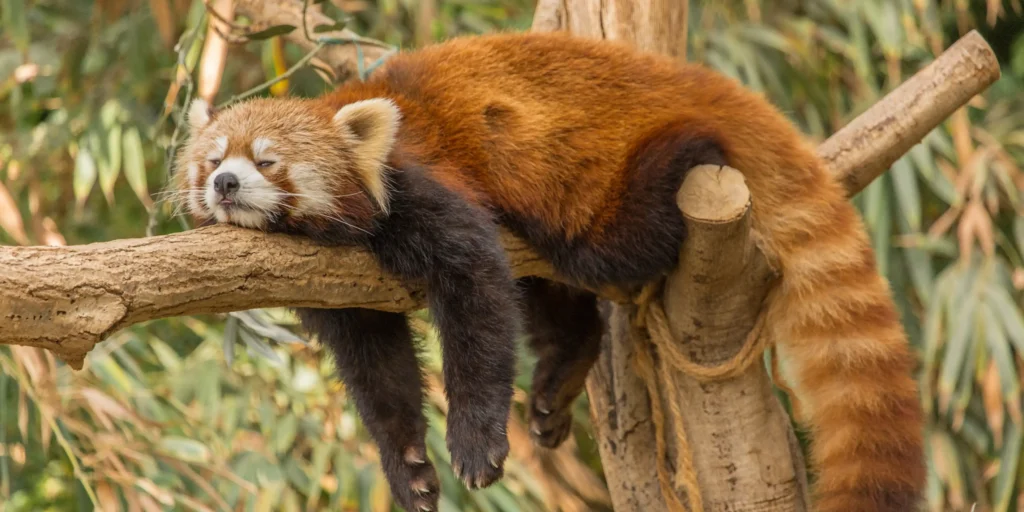
The red panda is one of Makalu–Barun’s most beloved animals — an elusive, tree-dwelling mammal found in dense bamboo forests between 2,500m and 4,000m. With its fiery fur, ringed tail and gentle face, it looks almost mythical.
Seeing a red panda takes patience. They spend much of the day resting on branches or feeding quietly on bamboo shoots. Sherpa and Rai communities often help identify areas where fresh feeding signs appear — another reason why trekking with locally-rooted teams makes your experience more meaningful.
Threats to red pandas include:
- Habitat fragmentation due to climate change.
- Forest fires in dry seasons.
- Decline in bamboo availability.
Thankfully, Makalu–Barun’s protected forests and conservation programs have made this region a stronghold for the species.
Black Bears, Clouded Leopards & Other Mammals
The middle and upper forests of Makalu–Barun are home to a surprising number of mammals — some rarely seen, yet critical to the ecological balance.
Himalayan Black Bear
These bears are powerful foragers, spending autumn gathering berries, insects and roots. Their scratch marks are often found on tree trunks near Mumbuk.
Clouded Leopard
One of Asia’s most mysterious cats, clouded leopards inhabit lower and mid-altitude forests. They are agile climbers and excellent ambush hunters.
Musk Deer
Shy and solitary, these deer prefer mossy forests and rocky slopes. Male musk deer are targeted by poachers in some regions, but Makalu–Barun’s strict protection has helped conserve them.
Blue Sheep (Bharal)
Common above 4,000m, especially around Shershong and Langmale. They form the backbone of the snow leopard’s diet.
Together, these mammals create a dynamic food web — herbivores grazing on alpine plants, predators controlling populations, and smaller species contributing to soil health and seed dispersal.
Birdlife: A Paradise for Ornithologists
With more than 400 species, Makalu–Barun is a dream destination for birdwatchers. The altitudinal variation means trekkers encounter different bird communities as they move higher.
Highlight Species
- Himalayan Monal — Nepal’s national bird, famous for its iridescent plumage.
- Satyr Tragopan — extremely shy, known for its striking colors.
- Blood Pheasant — found in high alpine meadows.
- Golden Eagle — often seen soaring over ridges.
- Spotted Nutcracker — common in fir and pine forests.
- Fire-tailed Sunbird — a favorite among photographers.
Bird activity is most vibrant in spring (March–May) when alpine species begin courtship displays and forests burst with flowers attracting insects and nectar feeders.
“To walk through Makalu–Barun is to travel through millions of years of natural evolution in a single trek.”
Field Biologist, Eastern Himalaya
Threats to Wildlife & Conservation Challenges
Despite its remoteness, Makalu–Barun faces several urgent threats:
- Climate Change: Glacial melt, shifting vegetation zones and changing monsoon patterns disrupt habitats.
- Overharvesting of Herbs: The lucrative collection of yarsagumba and other medicinal plants can degrade alpine meadows.
- Deforestation at Lower Elevations: Fuelwood collection remains a problem in buffer zones.
- Poaching: Musk deer and pheasants are particularly vulnerable, though enforcement has improved.
Community involvement is the cornerstone of conservation here. Buffer Zone Committees, supported by WWF and ICIMOD, help regulate forest use, educate residents and create local stewardship programs. Many Sherpa and Rai families take pride in protecting wildlife, often reporting illegal hunting and helping conservation teams track species.
Responsible trekking companies play a role too. At Eagle Trail Escapes, we emphasize low-impact travel — avoiding firewood use, minimizing waste and hiring local porters and guides who understand sensitive habitats.